Instagram

www.instagram.com/afsarulhaq
Showing posts with label Windows. Show all posts

Wednesday, 5 November 2014

3D printer is 10 times faster than current models

Hewlett-Packard (HP) has unveiled a 3D printer that it claims will be 10 times faster than current models.


hp 3d printer 10 times faster 

HP has introduced its vision for the future of computing and 3D printing by unveiling its new "Blended Reality" ecosystem. Designed to break down the barriers between the digital and physical worlds, this ecosystem is underpinned by two key advancements:

  • HP Multi Jet Fusion: A revolutionary technology engineered to resolve critical gaps in the combination of speed, quality and cost, and deliver on the potential of 3D printing.
  • Sprout by HP: A first-of-its-kind Immersive Computing platform that will redefine the user experience and that creates a foundation for future immersive technologies.
"We are on the cusp of a transformative era in computing and printing," said Dion Weisler, executive vice president, Printing & Personal Systems (PPS). "Our ability to deliver Blended Reality technologies will reduce the barriers between the digital and physical worlds, enabling us to express ourselves at the speed of thought – without filters, without limitations. This ecosystem opens up new market categories that can define the future, empowering people to create, interact and inspire like never before."
"As we examined the existing 3D print market, we saw a great deal of potential but also saw major gaps in the combination of speed, quality and cost," said Stephen Nigro, vice president of Inkjet and Graphic Solutions at HP. "HP Multi Jet Fusion is designed to transform manufacturing across industries by delivering on the full potential of 3D printing with better quality, increased productivity, and break-through economics."
Multi Jet Fusion is built on HP Thermal Inkjet technology and features a unique synchronous architecture that significantly improves the commercial viability of 3D printing and has the potential to change the way we think about manufacturing.

  • 10 times faster: Images entire surface areas versus one point at a time to achieve breakthrough functional build speeds, 10 times faster than the fastest technology in the market today.
  • New levels of quality, strength and durability: Multi-agent printing process utilising HP Thermal Inkjet arrays that simultaneously apply multiple liquid agents to produce best-in-class quality that combines greater accuracy, resiliency and uniform part strength in all three axis directions.
  • Accuracy and detail: Capable of delivering fully functional parts with more accuracy, finer details and smooth surfaces, and able to manipulate part and material properties, including form, texture, friction, strength, elasticity, electrical, thermal properties and more.
  • Achieves breakthrough economics: Unifies and integrates various steps of the print process to reduce running time, cost, energy consumption and waste to significantly improve 3D printing economics.
  • hp blended reality ecosystem
    Sprout – the first product available in HP's Blended Reality ecosystem – combines the power of an advanced desktop computer with an immersive, natural user interface to create a new computing experience. As shown in the image above, this puts a scanner, depth sensor, hi-resolution camera and projector into a single device, allowing users to take physical items and seamlessly merge them into a digital workspace. The system also delivers an unmatched collaboration platform, allowing users in multiple locations to collaborate on and manipulate a single piece of digital content in real-time.
    "We live in a 3D world, but today we create in a 2D world on existing devices," said Ron Coughlin, senior vice president, Consumer PC & Solutions, HP. "Sprout by HP is a big step forward in reimagining the boundaries of how we create and engage with technology to allow users to move seamlessly from thought to expression."
    Together, HP says these advancements have the potential to revolutionise production and offer small businesses a new way to produce goods and parts for customers. HP aims to invite open collaboration and partnerships in 2015 to further develop its 3D print system, with general consumer availability in the second half of 2016.... 

        Also Visit Our Partner Site- NSonline90

           Don't Forget To Subscribe Our YouTube Channel- NSonline90


Wi-Fi up to five times faster coming in 2015

Samsung Electronics has developed a new way of transmitting Wi-Fi data five times faster than was previously possible. The new technology is expected to be available in consumer devices as early as 2015.
wifi
If you've been to a cafe or other public place recently and been frustrated at the slow speed of Wi-Fi, a new breakthrough by Samsung Electronics may soon change that. Researchers at the company have this week achieved the development of 60GHz Wi-Fi allowing transfer rates of 4.6Gbps, or 575MB per second. That is 5.3 times faster than the previous maximum speed for consumer devices (866Mbps, or 108MB per second).
Today's generation of Wi-Fi uses the 2.4Ghz and 5Ghz areas of the radio spectrum. The 60GHz band is currently unlicensed and offers major potential, but previous attempts to exploit it have failed to send data over significant distances, due to path loss and weak penetration properties. Samsung has overcome these issues through a combination of millimetre-wave circuit design, a high performance modem and wide-coverage beam-forming antenna. This eliminates co-channel interference, regardless of the number of devices using the same network.
Commercialisation is expected in 2015, with Samsung planning integration into a wide variety of products – including audio visual, medical devices and telecommunications equipment. It will also help to spur the Internet of Things.
“Samsung prides itself at being of the forefront of technology innovation, and is delighted to have overcome the barriers to the commercialisation of 60GHz millimetre-wave band Wi-Fi technology,” said Paul Templeton, General Manager of Samsung Networks UK. “This breakthrough has opened the door to exciting possibilities for Samsung’s next-generation devices, and has also changed the face of the future development of Wi-Fi technology, promising innovations that were not previously within reach.”
To give an idea of the speed: a 1GB movie will take less than three seconds to transfer between devices, while uncompressed high-definition videos could easily be streamed from mobile devices to TVs in real-time without any delay......

Also Visit Our Partner Site- NSonline90

 Don't Forget To Subscribe Our YouTube Channel- NSonline90


Computer program recognises emotions with 87% accuracy

Researchers in Bangladesh have designed a computer program able to accurately recognise users’ emotional states as much as 87% of the time, depending on the emotion.
keyboard typing 
To provide data for the study, volunteers were asked to note their emotional state after typing passages of fixed text, as well as at regular intervals during their regular (‘free text’) computer use. This provided researchers with data about keystroke attributes associated with seven emotional states (joy, fear, anger, sadness, disgust, shame and guilt). To help them analyse sample texts, the researchers made use of a standard database of words and sentences associated with the same seven emotional states.
After running a variety of tests, the researchers found that their new ‘combined’ results were better than their separate results; what’s more, the ‘combined’ approach improved performance for five of the seven categories of emotion. Joy (87%) and anger (81%) had the highest rates of accuracy.
This research is an important contribution to ‘affective computing’, a growing field dedicated to ‘detecting user emotion in a particular moment’. As the authors note – for all the advances in computing power, performance and size in recent years, a lot more can still be done in terms of their interactions with end users. “Emotionally aware systems can be a step ahead in this regard,” they write. “Computer systems that can detect user emotion can do a lot better than the present systems in gaming, online teaching, text processing, video and image processing, user authentication and so many other areas where user emotional state is crucial.”
While much work remains to be done, this research is an important step in making ‘emotionally intelligent’ systems that recognise users’ emotional states to adapt their music, graphics, content or approach to learning a reality.....


Also Visit Our Partner Site- NSonline90

 Don't Forget To Subscribe Our YouTube Channel- NSonline90


A new data transfer record: 43 terabits per second

A team in Denmark has broken the world record for single fibre data transmission, achieving a transfer rate of 43 terabits per second over a distance of 41 miles (67 km). They also report a speed of 1 petabit (1000 terabits) when combining multiple lasers.
43 terabits per second world data speed transfer record 2014
In 2009, a research group at the Technical University of Denmark (DTU) was the first to break the 1 terabit barrier for data transfer. Their record was shattered in 2011, when the Karlsruhe Institute of Technology in Germany achieved 26 terabits per second. Now, DTU have regained the title, demonstrating 43 terabits per second (Tbps) through a single optical fibre. This is fast enough to download a 1GB file in about 0.0002 seconds – or the entire contents of a 1TB hard drive in 0.2 seconds.
The Danish team's effort may seem almost excessive, to the point of comedy. However, current trends show that insanely fast transfer speeds like this will be necessary in the relatively near future. Like a digital explosion, the Internet continues to expand and grow exponentially – doubling in size every two years. Improvements in video quality and image resolution mean the amount of data appearing online is mushrooming to enormous proportions, while at the same time, billions more people are gaining access to the web.
This also requires energy which currently generates about two percent of CO2 emissions. Therefore, it is essential to identify solutions for the Internet that make significant reductions in power consumption while simultaneously expanding the bandwidth.
DTU's researchers achieved their latest record by using a new type of optical fibre borrowed from the Japanese telecoms giant NNT. This type of fibre contains seven cores (glass threads) instead of the single core used in standard fibres, making it possible to transfer even more data. Despite the fact that it comprises seven cores, the new fibre does not take up any more space than the standard version.
As to when speeds in the tens of terabits range might be affordable to mainstream consumers, we reckon sometime in the 2030s....


Also Visit Our Partner Site- NSonline90

 Don't Forget To Subscribe Our YouTube Channel- NSonline90


Shatterproof screens to protect smartphones

Polymer scientists at the University of Akron in Ohio have developed a transparent electrode that could change the face of smartphones, literally, by making their displays shatterproof.
cracked smartphone screen 
In a recently published paper, researchers show how a transparent layer of nanowire-based electrodes on a polymer surface could be extraordinarily tough and flexible, withstanding repeated scotch tape peeling and bending tests. This could revolutionise and replace conventional touchscreens, according to Yu Zhu, UA assistant professor of polymer science. Currently used coatings made of indium tin oxide (ITO) are more brittle, most likely to shatter, and increasingly costly to manufacture.
“These two pronounced factors drive the need to substitute ITO with a cost-effective and flexible conductive transparent film,” Zhu says, adding that the new film provides the same degree of transparency as ITO, yet offers greater conductivity. The novel film retains its shape and functionality after tests in which it has been bent 1,000 times. Due to its flexibility, the transparent electrode can be fabricated in economical, mass-quantity rolls.
“We expect this film to emerge on the market as a true ITO competitor,” Zhu says. “The annoying problem of cracked smartphone screens may be solved once and for all with this flexible touchscreen.”
The findings are published by the American Chemical Society’s journal ACS Nano in a study titled “A Tough and High-Performance Transparent Electrode from a Scalable and Transfer-Free Method.”

shatterproof smartphone screen material...


Also Visit Our Partner Site- NSonline90

 Don't Forget To Subscribe Our YouTube Channel- NSonline90


Intel announces the first 14 nanometre processor

At the Computex conference in Taipei, chipmaker Intel has revealed a fanless mobile PC reference design using the first of its next-generation 14nm "Broadwell" processors.
14 nanometre processor mobile tablet device
The 2 in 1 pictured here is a 12.5" screen that is just 7.2 mm thick with keyboard detached and weighs 670 grams. The Surface Pro 3 – for comparison – is 9.1 mm thick and weighs 800 grams. It includes a media dock that provides additional cooling for a burst of performance. The next-generation chip is purpose-built for 2 in 1s and will hit the market later in 2014. Called the Intel Core M, it will be the most energy-efficient Intel Core processor in the company's history with power usage cut by up to 45 percent, resulting in 60 percent less heat. The majority of designs based on this new chip are expected to be fanless, with up to 32 hours of battery life, offering both a lightning-fast tablet and razor-thin laptop.
Intel is also delivering innovation and performance for the most demanding PC users. During the conference, the company introduced its 4th generation Core i7 and i5 processor "K" SKU – the first from Intel to deliver four cores at up to 4 GHz base frequency. This desktop processor, built for enthusiasts, enables new levels of overclocking capability. Production shipments begin this month.
Intel also outlined progress towards a vision to deliver 3-D camera and voice recognition technologies to advance more natural, intuitive interaction with computing devices. The latest RealSense software development kit will be made available in the third quarter of 2014, providing opportunity for developers of all skill levels to create user interfaces.
Computer processors continue to get smaller, faster and cheaper thanks to Moore's Law – expanding the scale and potential for technology in everything from cloud computing and the Internet of Things, to mobile phones and wearable technology.
"The lines between technology categories are blurring as the era of integrated computing takes hold where form factor matters less than the experience delivered when all devices are connected to each other and to the cloud," said Renée James, Intel Corporation President. "Whether it's a smartphone, smart shirt, ultra-thin 2-in-1, or a new cloud service delivered to smart buildings outfitted with connected systems, together Intel and the Taiwan ecosystem have the opportunity to accelerate and deliver the value of a smart, seamlessly connected and integrated world of computing." 


Also Visit Our Partner Site- NSonline90

 Don't Forget To Subscribe Our YouTube Channel- NSonline90


Microsoft releases new Outlook for Mac, other Office updates coming in 2015


There's a reason Microsoft's latest version of Outlook for OS X leaked before the rest of its Office suite: the email client is ready, but other apps like Word and PowerPoint aren't quite finished yet. Today Microsoft is launching a brand new Outlook for Mac, and Office 365 subscribers can download it right now. The company is promising "improved performance and reliability and a fresh look and feel that is unmistakably Microsoft Office," and says this refresh brings Outlook on OS X closer in line with what users of the PC, web, and iPad Office apps have come to expect.
The user interface has been updated with a more modern look, smoother scrolling, and improved "agility" when switching between Ribbon tabs. It also delivers full push email support for Office 365 users and online archive support for digging through your archived Exchange mail.
As for the rest of Office, you're in for a bit of a wait. Microsoft is promising to deliver betas of Word, Excel, PowerPoint, and OneNote in the first half of 2015. A final consumer release will follow in the second half of the year. "Office 365 commercial and consumer subscribers will get the next version at no additional cost, and we will release a perpetual license of Office for Mac in the same timeframe," Microsoft says.....

Also Visit Our Partner Site- NSonline90

 Don't Forget To Subscribe Our YouTube Channel- NSonline90

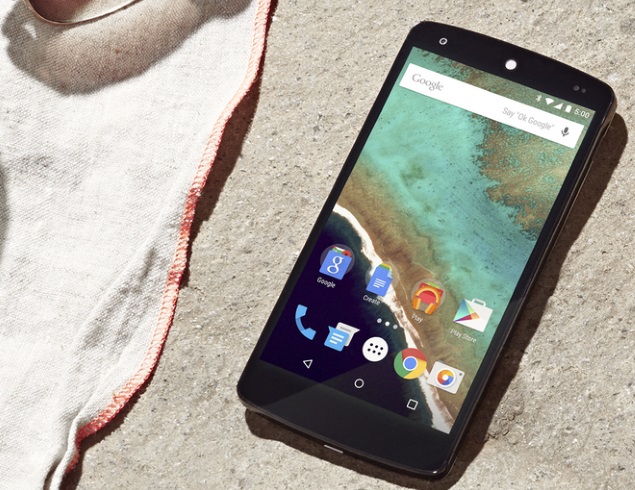
11 Nexus Android 5.0 Lollipop Update Release Predictions

As we push further and further away from October’s Android 5.0 Lollipop launch date, Nexus 5, Nexus 10, Nexus 7, and Nexus 4 users are starting to wonder about their next Android upgrade. Today, a couple of days rumored Android 5.0 Lollipop release date, we want to make some bold predictions regarding Google’s upcoming Android 5.0 Lollipop release.
The Android L update was first announced as Android 4.4 KitKat’s successor back in June at Google I/O. At the event, Google did not confirm an Android L release date or name though it did outline many of its features and offer a pre-release version to select Nexus users. In the weeks after the early beta release, we saw features teased and release
dates rumored and last month, Google finally spilled the beans on Android L.
As expected, Android L is called Android 5.0 Lollipop. The update will be accompanied by two new Nexus devices including a Nexus 9 from HTC and a Nexus 6 from Motorola. Both devices will help usher in a new era for Google and its Android operating system. Problem is, Google still hasn’t confirmed a specific Android 5.0 Lollipop release date for owners of older Nexus smartphones and tablets.
Earlier this month, the company confirmed several Android 5.0 Lollipop updates for arrival including updates for the Nexus 5, Nexus 4, Nexus 7, Nexus 7 2012, and Nexus 10. And while those updates are confirmed, the Nexus Android 5.0 Lollipop release date for each of those devices remains out of reach, at least for right now.
With that in mind, and rumors swirling, we want to make a few bold predictions about Google’s upcoming Android 5.0 Lollipop release for Nexus smartphones and tablets.

Brief Announcement, If Any

I have a feeling that we’re going to see the Android 5.0 Lollipop release kicked off by a brief announcement from Google that doesn’t share much or silence. I envision the roll out combining aspects of last year’s Android 4.4 KitKat release which saw Google announce some updates and not others and this past week’s Nexus 6 pre-orders which took place without any kind of warning.
If Google does announce something, it will almost certainly be on the day of and perhaps a few short minutes before the actual roll outs begin. Don’t expect anything sooner than that at this point given what we’ve heard about the update’s release date.

First Android 5.0 Lollipop Release Next Week

Rumors suggest that the first Nexus Android 5.0 Lollipop release will take place this coming Monday. That date isn’t confirmed though it appears likely. Google’s Android roll outs tend to push out shortly after a Nexus hardware launch. The Nexus 9 is scheduled to be released next week which means that the timing for an Android 5.0 push is perfect.
http://www.phonesreview.co.uk/wp-content/phoneimages/Nexus-5-Android-5.0-Lollipop-vs-OnePlus-One-4.4-KitKat.jpg


Even if Monday isn’t the day, we have a feeling that the Android 5.0 Lollipop update, which Google says will arrive in the “coming weeks,” should roll out next week barring any unforeseen problems in testing. Testing can wreck even the soundest of plans and given the turmoil that’s often enveloped Nexus releases, we expect Google to do all that it can to ensure a smooth delivery.
That said, after a beta process and with the final beta release currently available to developers, we think that we’re close and we should see the first updates touch down in the first week of November.

Wi-Fi Nexus Models First

A leaked document suggests that the Nexus 10 and Nexus 7 Wi-Fi only will be the first to Android 5.0 Lollipop. This makes a lot of sense. For years, updates for cellular models have followed their Wi-Fi counterparts. Testing for Wi-Fi and cellular data is typically far more involved. So, it makes sense that Google would start with these devices and then take its time with the more problematic cellular devices.

Cellular Models Next

Needless to say, we expect the cellular Nexus devices including the Nexus 7, Nexus 4 and Nexus 5 to be next in line. We have a feeling that their Android 5.0 Lollipop releases will take place next month as well though we may see a gap of a couple of weeks as Google works to get its testing done on its smartphones and cellular powered tablets.

Nexus 7 LTE Dead Last

The Nexus 7 LTE has been very problematic from the start. First, consumers had to deal with a lengthy delay for Verizon. Then, Android 4.4.3 KitKat and Android 4.4.4 KitKat rolled out extremely slowly with Android 4.4.4 KitKat rolling out several weeks after the other upgrades. It’s clear that this device is giving Google problems and we would not be shocked if it was the last Nexus Android 5.0 Lollipop update.
Android-4.4.4-Nexus-7-Review
We sincerely doubt that it’s going to be weeks or even months behind the rest of the pack but we would not be surprised if it was the last of Google’s Nexus Android 5.0 roll outs. The odds are pretty good.

Staggered Lollipop Releases

Look for Google to roll all of these updates out slowly. We’re talking over the course of a week or more. Many moons ago, Android engineer Dan Morrill explained Google’s process:
Rollouts are conducted in phases. Typically they start at 1% of devices for around 24 – 48 hours; we watch the return rates and resulting device checkins and error reports (if any), and make sure nothing looks wrong before sending it to more. Then typically it goes to 25%, 50%, 100% over the course of a week or two.
What the percentages mean is that when your device checks in, it has a 1% chance (for example) of being offered the OTA. If it doesn’t (randomly) get an offer, it will never get an offer until the next batch.
IOW, once your device checks in and gets turned down, that’s it until the next batch. Mashing on the “check for updates” button just causes your device to check in again, and get automatically turned down again. Think about how that makes your device feel! WON’T SOMEONE PLEASE THINK OF THE PHONES?!
That said, once the new batch does start, hitting that button does give you a new roll of the dice — but once. Since devices usually only check in for system updates every 24 hours (I think? Certainly on a many-hours basis) this can get you your shot sooner than it would happen on its own.
So, mash away. :) Just be patient, and mashing on it more often than once or twice a day isn’t going to gain you anything.
Edit: also, keep in mind that this isn’t first-come/first-served. You’re not racing other devices to get your slot in the current batch, or something.
With Android 5.0 Lollipop set to bring about some massive changes for Nexus devices, we think Google is going to take a very cautious approach. Not just for one device either, for all of these devices. Staggered releases happen with all Android updates, not just the major ones like Android 5.0 Lollipop.

Android 5.0 Release Complete by December

With all of that in mind, Nexus Android roll outs rarely stretch out over two months. We typically see Google get the upgrades rolled out within a few weeks. With Android 5.0, we think that means a completion by the end of the year and more specifically, the beginning of December. That’s for all devices, not just the ones rumored to get the upgrade in early November.

Usual Array of Bugs

Get ready Nexus owners because I am willing to bet that Android 5.0 Lollipop is going to come with a host of problems. The beta testing should help but Nexus software updates are almost always buggy. Trust me, I’ve been a Nexus user for years and I’ve seen many an Android update wreck havoc on my devices. I’m not the only one.
http://cdn.ndtv.com/tech/images/gadgets/nexus_5_android_lollipop.jpg

Typical Nexus Android update issues include battery life problems, slow charging, broken Wi-Fi, broken cellular connections, bad Bluetooth, and random crashes. I have a feeling all of those will strike Nexus users in the days ahead. I’m also confident that there will be an assortment of other bugs that Google and its Nexus users will have to deal with in the weeks after its release.
Nexus Android update bugs are a fact of life and no software update is perfect. You’ll want to head into the Android 5.0 release date as prepared as humanly possible to help minimize the damage.

Bunch of Fixes for Android 4.4.4 Problems

Now, I don’t think it will all be bad. In fact, I have a feeling that the Android 5.0 Lollipop update is going to fix a lot of issues that are currently on board Android 4.4.4 KitKat. There are Android 4.4.4 KitKat problems on board current Nexus devices. Believe me, I’ve heard from countless Nexus users, many of whom have been complaining since the summer.
Read the Android 4.4.4 review on the nexus 4 to see how this small update handles on an older device.

So, if you’re dealing with Android 4.4.4 KitKat problems, you’re going to want to absorb as much information about Android 5.0 Lollipop that you can on release day. There’s a very good chance that it will help solve some of the issues that are on board Android 4.4.4 KitKat. You’ll just want to make sure that the fixes outweigh the problems.

Android 5.0.1 Before 2015

This is a bold one but I’m willing to bet on an Android 5.0.1 release before the end of the year. Nexus software updates are typically troubled and Nexus users are typically extremely vocal about their problems. Google typically rolls out at least a couple of bug fix updates and the first of those usually arrives in the weeks after release to tidy up a little before the major bug fix hits months later.
We would not be surprised if Google rolled out at least one Android 5.0 Lollipop bug fix to Nexus users before 2015 hits though like all Android updates, it will probably bring some issues of its own along with it.

Last Major Update for Nexus 4 & Nexus 7 2012

The Nexus 4 and Nexus 7 2012 Android 5.0 Lollipop updates came as a bit of a surprise given their age. Google used to uphold a strict 18 month software support policy though it appears to be breaking its own rules with these two upgrades. The Nexus 4 and Nexus 7 2012 are now two years old and very rarely do we see Android devices live until the three year mark.
Nexus 4 Android 4.4.3 Review Early - 1

If we had to guess, we’d say that the Android 5.0 Lollipop release will be their last official upgrades from Google. Of course, thanks to thriving development communities, these devices should live on well past their final upgrade. Developers will always find a way to port new software and its features to older devices, especially developer devices like the Nexus 4 and Nexus 7.

Also Visit Our Partner Site- NSonline90

 Don't Forget To Subscribe Our YouTube Channel- NSonline90

Android 5.0 Lollipop Release Date Update for Nexus 4, 5, 6, 7, 9 and 10: Expected on November 3rd


Rumors concerning Android 5.0 Lollipop's release date on November 3rd for Nexus devices have been confirmed by an internal document obtained by tech site Android Police.

While the release date hasn't been officially confirmed from Google, this November 3rd release date is said to apply to all Google Nexus devices, including the Nexus 9, the Nexus 6, and the aging Nexus 4, 5, 7, and 10.

The Nexus 9 is Google's newest tablet that sports an 8.9-inch display and comes available in 16GB or 32GB models. The Nexus 6 is Google's latest flagship smartphone that boasts a 6-inch quad HD screen and an improved 13-megapixel camera. Both devices will launch on November 3rd.

The document obtained by Android Police was sent to app developers as an instruction in regards to the currently available Software Development Kit for Android 5.0 Lollipop. "Starting November 3rd, Nexus 9 will be the first device available to consumers that will run Android 5.0," the note reads. "Therefore, it is a great time to publish on Google Play, once you've updated and tested your app. Even if your apps target earlier versions of Android, take a few moments to test them on the Android 5.0 system images, and publish any updates needed in advance of the Android 5.0 rollout."

With a record-breaking 5,000-plus new APIs being supported at launch, Lollipop is said to be the most ambitious version of the Android OS to date. This open nature of the operating system is its biggest advantage, allowing developers from all over the world to improve the Android experience for phones, tablets, and wearables.

While the brief note doesn't name any other devices than the Nexus 9 and 6, Android Police mentions previous reports that both the Nexus 7 and Nexus 10 will see Lollipop's over-the-air update on the 3rd. The Nexus 4 and 5 were both reported as dropping "in the coming weeks," but it's believed that all Nexus devices may unlock the OS update on the same day.

But as with every other OS update, Android 5.0 Lollipop is expected to roll out to certain users and certain carriers in stages. Then, after the Nexus devices have had their updates, all other Android manufacturers are expected to follow through. The Nexus 6 and Nexus 9 will both launch with the operating system installed, and will be the first to contain the new Android update.


Also Visit Our Partner Site- NSonline90

 Don't Forget To Subscribe Our YouTube Channel- NSonline90


Monday, 15 September 2014

Windows


Install Windows 7 -
Install Windows 7.

• Install Windows 7

Windows 7 is probably the easiest Windows operating system to install. You're only asked a few important questions when you install Windows 7 - most of the setup process is completely automatic.
The bigger issue than the installation itself is which kind of Windows 7 installation should you do? A Windows 7 new install? A Windows 7 clean install? What about a parallel installation or maybe a Startup Repair instead?
This article will help you make the right installation decision and link you to visual, step-by-step guides designed to walk you through the entire Windows 7 installation process one screen at a time. More »
Install Windows Vista -
Install Windows Vista.

• Install Windows Vista

Like Windows 7, the Windows Vistainstall process is very easy and straightforward..
When installing Windows Vista, again like Windows 7, you'll need to decide which kind of Windows install to perform.
Maybe you need to erase the operating system and install Windows Vista again from scratch. Maybe you don't.
This Windows Vista specific article will help you make the right decision. For each installation method, I've linked to screen-by-screen tutorials to help you through the entire Windows Vista install process. More »

Instant Free Download. Convert Fast & Easy!
Lost your data, Stellar would help Call For Free Consultation


Install Windows XP -
Install Windows XP.

• Install Windows XP

Installing Windows XP can be a bit frustrating and time consuming, especially when compared to the installation processes in Microsoft's newer operating systems.
Combine that trouble with deciding which way to install Windows (yep, there's more than one way to install Windows XP) and it's no wonder so many people pay other people to install Windows XP for them.
You, however, won't need to do this. This article will help you decide the right way to install Windows XP and link you to excellent step-by-step Windows XP setup tutorials that show you every part of the process. More »


Windows8

Installing Windows might sound like a daunting task but it's really quite easy, especially if you're installing a more recent operating system like Windows 8 or Windows 7.
It's especially easy to install Windows with a little help! No need to take your PC in to the local experts for a simple reinstall - you can install Windows all by yourself!
Click on the Windows operating system you're planning to install for a helpful comparison on the different Windows installation methods and links to visual, step-by-step guides explaining how to install Windows.

Windows 8 Splash Screen -
Install Windows 8.

• Install Windows 8

The very best way to install Windows 8 is by a method called a "clean install."
With a clean install, you'll get that "new computer" feel with Windows 8, without all the junk software. If you're replacing a previous version of Windows, clean installing Windows 8 is most certainly what you want to do.
Here's a complete tutorial of the Windows 8 clean install process, complete with screenshots and detailed advice along the way. More »

Fast, Secure and Easy to Use. Download RoboForm Free Today!
Restore Start Button for Windows 8. Download Start Button 8 100% Free!