Instagram

www.instagram.com/afsarulhaq
Showing posts with label napster&Sparkus. Show all posts

Wednesday, 5 November 2014

Wi-Fi up to five times faster coming in 2015

Samsung Electronics has developed a new way of transmitting Wi-Fi data five times faster than was previously possible. The new technology is expected to be available in consumer devices as early as 2015.
wifi
If you've been to a cafe or other public place recently and been frustrated at the slow speed of Wi-Fi, a new breakthrough by Samsung Electronics may soon change that. Researchers at the company have this week achieved the development of 60GHz Wi-Fi allowing transfer rates of 4.6Gbps, or 575MB per second. That is 5.3 times faster than the previous maximum speed for consumer devices (866Mbps, or 108MB per second).
Today's generation of Wi-Fi uses the 2.4Ghz and 5Ghz areas of the radio spectrum. The 60GHz band is currently unlicensed and offers major potential, but previous attempts to exploit it have failed to send data over significant distances, due to path loss and weak penetration properties. Samsung has overcome these issues through a combination of millimetre-wave circuit design, a high performance modem and wide-coverage beam-forming antenna. This eliminates co-channel interference, regardless of the number of devices using the same network.
Commercialisation is expected in 2015, with Samsung planning integration into a wide variety of products – including audio visual, medical devices and telecommunications equipment. It will also help to spur the Internet of Things.
“Samsung prides itself at being of the forefront of technology innovation, and is delighted to have overcome the barriers to the commercialisation of 60GHz millimetre-wave band Wi-Fi technology,” said Paul Templeton, General Manager of Samsung Networks UK. “This breakthrough has opened the door to exciting possibilities for Samsung’s next-generation devices, and has also changed the face of the future development of Wi-Fi technology, promising innovations that were not previously within reach.”
To give an idea of the speed: a 1GB movie will take less than three seconds to transfer between devices, while uncompressed high-definition videos could easily be streamed from mobile devices to TVs in real-time without any delay......

Also Visit Our Partner Site- NSonline90

 Don't Forget To Subscribe Our YouTube Channel- NSonline90


Computer program recognises emotions with 87% accuracy

Researchers in Bangladesh have designed a computer program able to accurately recognise users’ emotional states as much as 87% of the time, depending on the emotion.
keyboard typing 
To provide data for the study, volunteers were asked to note their emotional state after typing passages of fixed text, as well as at regular intervals during their regular (‘free text’) computer use. This provided researchers with data about keystroke attributes associated with seven emotional states (joy, fear, anger, sadness, disgust, shame and guilt). To help them analyse sample texts, the researchers made use of a standard database of words and sentences associated with the same seven emotional states.
After running a variety of tests, the researchers found that their new ‘combined’ results were better than their separate results; what’s more, the ‘combined’ approach improved performance for five of the seven categories of emotion. Joy (87%) and anger (81%) had the highest rates of accuracy.
This research is an important contribution to ‘affective computing’, a growing field dedicated to ‘detecting user emotion in a particular moment’. As the authors note – for all the advances in computing power, performance and size in recent years, a lot more can still be done in terms of their interactions with end users. “Emotionally aware systems can be a step ahead in this regard,” they write. “Computer systems that can detect user emotion can do a lot better than the present systems in gaming, online teaching, text processing, video and image processing, user authentication and so many other areas where user emotional state is crucial.”
While much work remains to be done, this research is an important step in making ‘emotionally intelligent’ systems that recognise users’ emotional states to adapt their music, graphics, content or approach to learning a reality.....


Also Visit Our Partner Site- NSonline90

 Don't Forget To Subscribe Our YouTube Channel- NSonline90


A new data transfer record: 43 terabits per second

A team in Denmark has broken the world record for single fibre data transmission, achieving a transfer rate of 43 terabits per second over a distance of 41 miles (67 km). They also report a speed of 1 petabit (1000 terabits) when combining multiple lasers.
43 terabits per second world data speed transfer record 2014
In 2009, a research group at the Technical University of Denmark (DTU) was the first to break the 1 terabit barrier for data transfer. Their record was shattered in 2011, when the Karlsruhe Institute of Technology in Germany achieved 26 terabits per second. Now, DTU have regained the title, demonstrating 43 terabits per second (Tbps) through a single optical fibre. This is fast enough to download a 1GB file in about 0.0002 seconds – or the entire contents of a 1TB hard drive in 0.2 seconds.
The Danish team's effort may seem almost excessive, to the point of comedy. However, current trends show that insanely fast transfer speeds like this will be necessary in the relatively near future. Like a digital explosion, the Internet continues to expand and grow exponentially – doubling in size every two years. Improvements in video quality and image resolution mean the amount of data appearing online is mushrooming to enormous proportions, while at the same time, billions more people are gaining access to the web.
This also requires energy which currently generates about two percent of CO2 emissions. Therefore, it is essential to identify solutions for the Internet that make significant reductions in power consumption while simultaneously expanding the bandwidth.
DTU's researchers achieved their latest record by using a new type of optical fibre borrowed from the Japanese telecoms giant NNT. This type of fibre contains seven cores (glass threads) instead of the single core used in standard fibres, making it possible to transfer even more data. Despite the fact that it comprises seven cores, the new fibre does not take up any more space than the standard version.
As to when speeds in the tens of terabits range might be affordable to mainstream consumers, we reckon sometime in the 2030s....


Also Visit Our Partner Site- NSonline90

 Don't Forget To Subscribe Our YouTube Channel- NSonline90


Shatterproof screens to protect smartphones

Polymer scientists at the University of Akron in Ohio have developed a transparent electrode that could change the face of smartphones, literally, by making their displays shatterproof.
cracked smartphone screen 
In a recently published paper, researchers show how a transparent layer of nanowire-based electrodes on a polymer surface could be extraordinarily tough and flexible, withstanding repeated scotch tape peeling and bending tests. This could revolutionise and replace conventional touchscreens, according to Yu Zhu, UA assistant professor of polymer science. Currently used coatings made of indium tin oxide (ITO) are more brittle, most likely to shatter, and increasingly costly to manufacture.
“These two pronounced factors drive the need to substitute ITO with a cost-effective and flexible conductive transparent film,” Zhu says, adding that the new film provides the same degree of transparency as ITO, yet offers greater conductivity. The novel film retains its shape and functionality after tests in which it has been bent 1,000 times. Due to its flexibility, the transparent electrode can be fabricated in economical, mass-quantity rolls.
“We expect this film to emerge on the market as a true ITO competitor,” Zhu says. “The annoying problem of cracked smartphone screens may be solved once and for all with this flexible touchscreen.”
The findings are published by the American Chemical Society’s journal ACS Nano in a study titled “A Tough and High-Performance Transparent Electrode from a Scalable and Transfer-Free Method.”

shatterproof smartphone screen material...


Also Visit Our Partner Site- NSonline90

 Don't Forget To Subscribe Our YouTube Channel- NSonline90


Intel announces the first 14 nanometre processor

At the Computex conference in Taipei, chipmaker Intel has revealed a fanless mobile PC reference design using the first of its next-generation 14nm "Broadwell" processors.
14 nanometre processor mobile tablet device
The 2 in 1 pictured here is a 12.5" screen that is just 7.2 mm thick with keyboard detached and weighs 670 grams. The Surface Pro 3 – for comparison – is 9.1 mm thick and weighs 800 grams. It includes a media dock that provides additional cooling for a burst of performance. The next-generation chip is purpose-built for 2 in 1s and will hit the market later in 2014. Called the Intel Core M, it will be the most energy-efficient Intel Core processor in the company's history with power usage cut by up to 45 percent, resulting in 60 percent less heat. The majority of designs based on this new chip are expected to be fanless, with up to 32 hours of battery life, offering both a lightning-fast tablet and razor-thin laptop.
Intel is also delivering innovation and performance for the most demanding PC users. During the conference, the company introduced its 4th generation Core i7 and i5 processor "K" SKU – the first from Intel to deliver four cores at up to 4 GHz base frequency. This desktop processor, built for enthusiasts, enables new levels of overclocking capability. Production shipments begin this month.
Intel also outlined progress towards a vision to deliver 3-D camera and voice recognition technologies to advance more natural, intuitive interaction with computing devices. The latest RealSense software development kit will be made available in the third quarter of 2014, providing opportunity for developers of all skill levels to create user interfaces.
Computer processors continue to get smaller, faster and cheaper thanks to Moore's Law – expanding the scale and potential for technology in everything from cloud computing and the Internet of Things, to mobile phones and wearable technology.
"The lines between technology categories are blurring as the era of integrated computing takes hold where form factor matters less than the experience delivered when all devices are connected to each other and to the cloud," said RenĂ©e James, Intel Corporation President. "Whether it's a smartphone, smart shirt, ultra-thin 2-in-1, or a new cloud service delivered to smart buildings outfitted with connected systems, together Intel and the Taiwan ecosystem have the opportunity to accelerate and deliver the value of a smart, seamlessly connected and integrated world of computing." 


Also Visit Our Partner Site- NSonline90

 Don't Forget To Subscribe Our YouTube Channel- NSonline90


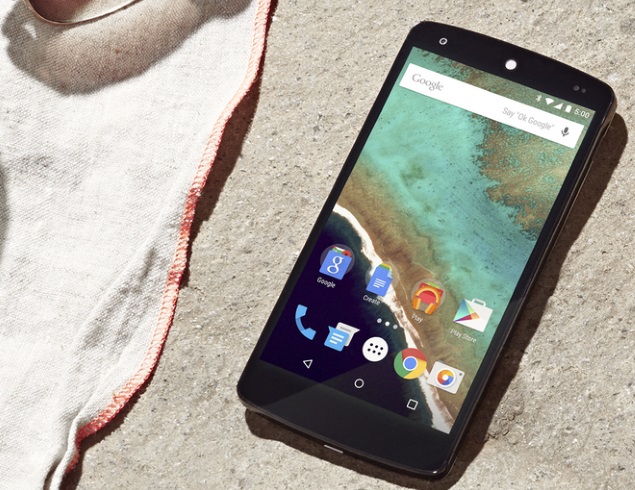
11 Nexus Android 5.0 Lollipop Update Release Predictions

As we push further and further away from October’s Android 5.0 Lollipop launch date, Nexus 5, Nexus 10, Nexus 7, and Nexus 4 users are starting to wonder about their next Android upgrade. Today, a couple of days rumored Android 5.0 Lollipop release date, we want to make some bold predictions regarding Google’s upcoming Android 5.0 Lollipop release.
The Android L update was first announced as Android 4.4 KitKat’s successor back in June at Google I/O. At the event, Google did not confirm an Android L release date or name though it did outline many of its features and offer a pre-release version to select Nexus users. In the weeks after the early beta release, we saw features teased and release
dates rumored and last month, Google finally spilled the beans on Android L.
As expected, Android L is called Android 5.0 Lollipop. The update will be accompanied by two new Nexus devices including a Nexus 9 from HTC and a Nexus 6 from Motorola. Both devices will help usher in a new era for Google and its Android operating system. Problem is, Google still hasn’t confirmed a specific Android 5.0 Lollipop release date for owners of older Nexus smartphones and tablets.
Earlier this month, the company confirmed several Android 5.0 Lollipop updates for arrival including updates for the Nexus 5, Nexus 4, Nexus 7, Nexus 7 2012, and Nexus 10. And while those updates are confirmed, the Nexus Android 5.0 Lollipop release date for each of those devices remains out of reach, at least for right now.
With that in mind, and rumors swirling, we want to make a few bold predictions about Google’s upcoming Android 5.0 Lollipop release for Nexus smartphones and tablets.

Brief Announcement, If Any

I have a feeling that we’re going to see the Android 5.0 Lollipop release kicked off by a brief announcement from Google that doesn’t share much or silence. I envision the roll out combining aspects of last year’s Android 4.4 KitKat release which saw Google announce some updates and not others and this past week’s Nexus 6 pre-orders which took place without any kind of warning.
If Google does announce something, it will almost certainly be on the day of and perhaps a few short minutes before the actual roll outs begin. Don’t expect anything sooner than that at this point given what we’ve heard about the update’s release date.

First Android 5.0 Lollipop Release Next Week

Rumors suggest that the first Nexus Android 5.0 Lollipop release will take place this coming Monday. That date isn’t confirmed though it appears likely. Google’s Android roll outs tend to push out shortly after a Nexus hardware launch. The Nexus 9 is scheduled to be released next week which means that the timing for an Android 5.0 push is perfect.
http://www.phonesreview.co.uk/wp-content/phoneimages/Nexus-5-Android-5.0-Lollipop-vs-OnePlus-One-4.4-KitKat.jpg


Even if Monday isn’t the day, we have a feeling that the Android 5.0 Lollipop update, which Google says will arrive in the “coming weeks,” should roll out next week barring any unforeseen problems in testing. Testing can wreck even the soundest of plans and given the turmoil that’s often enveloped Nexus releases, we expect Google to do all that it can to ensure a smooth delivery.
That said, after a beta process and with the final beta release currently available to developers, we think that we’re close and we should see the first updates touch down in the first week of November.

Wi-Fi Nexus Models First

A leaked document suggests that the Nexus 10 and Nexus 7 Wi-Fi only will be the first to Android 5.0 Lollipop. This makes a lot of sense. For years, updates for cellular models have followed their Wi-Fi counterparts. Testing for Wi-Fi and cellular data is typically far more involved. So, it makes sense that Google would start with these devices and then take its time with the more problematic cellular devices.

Cellular Models Next

Needless to say, we expect the cellular Nexus devices including the Nexus 7, Nexus 4 and Nexus 5 to be next in line. We have a feeling that their Android 5.0 Lollipop releases will take place next month as well though we may see a gap of a couple of weeks as Google works to get its testing done on its smartphones and cellular powered tablets.

Nexus 7 LTE Dead Last

The Nexus 7 LTE has been very problematic from the start. First, consumers had to deal with a lengthy delay for Verizon. Then, Android 4.4.3 KitKat and Android 4.4.4 KitKat rolled out extremely slowly with Android 4.4.4 KitKat rolling out several weeks after the other upgrades. It’s clear that this device is giving Google problems and we would not be shocked if it was the last Nexus Android 5.0 Lollipop update.
Android-4.4.4-Nexus-7-Review
We sincerely doubt that it’s going to be weeks or even months behind the rest of the pack but we would not be surprised if it was the last of Google’s Nexus Android 5.0 roll outs. The odds are pretty good.

Staggered Lollipop Releases

Look for Google to roll all of these updates out slowly. We’re talking over the course of a week or more. Many moons ago, Android engineer Dan Morrill explained Google’s process:
Rollouts are conducted in phases. Typically they start at 1% of devices for around 24 – 48 hours; we watch the return rates and resulting device checkins and error reports (if any), and make sure nothing looks wrong before sending it to more. Then typically it goes to 25%, 50%, 100% over the course of a week or two.
What the percentages mean is that when your device checks in, it has a 1% chance (for example) of being offered the OTA. If it doesn’t (randomly) get an offer, it will never get an offer until the next batch.
IOW, once your device checks in and gets turned down, that’s it until the next batch. Mashing on the “check for updates” button just causes your device to check in again, and get automatically turned down again. Think about how that makes your device feel! WON’T SOMEONE PLEASE THINK OF THE PHONES?!
That said, once the new batch does start, hitting that button does give you a new roll of the dice — but once. Since devices usually only check in for system updates every 24 hours (I think? Certainly on a many-hours basis) this can get you your shot sooner than it would happen on its own.
So, mash away. :) Just be patient, and mashing on it more often than once or twice a day isn’t going to gain you anything.
Edit: also, keep in mind that this isn’t first-come/first-served. You’re not racing other devices to get your slot in the current batch, or something.
With Android 5.0 Lollipop set to bring about some massive changes for Nexus devices, we think Google is going to take a very cautious approach. Not just for one device either, for all of these devices. Staggered releases happen with all Android updates, not just the major ones like Android 5.0 Lollipop.

Android 5.0 Release Complete by December

With all of that in mind, Nexus Android roll outs rarely stretch out over two months. We typically see Google get the upgrades rolled out within a few weeks. With Android 5.0, we think that means a completion by the end of the year and more specifically, the beginning of December. That’s for all devices, not just the ones rumored to get the upgrade in early November.

Usual Array of Bugs

Get ready Nexus owners because I am willing to bet that Android 5.0 Lollipop is going to come with a host of problems. The beta testing should help but Nexus software updates are almost always buggy. Trust me, I’ve been a Nexus user for years and I’ve seen many an Android update wreck havoc on my devices. I’m not the only one.
http://cdn.ndtv.com/tech/images/gadgets/nexus_5_android_lollipop.jpg

Typical Nexus Android update issues include battery life problems, slow charging, broken Wi-Fi, broken cellular connections, bad Bluetooth, and random crashes. I have a feeling all of those will strike Nexus users in the days ahead. I’m also confident that there will be an assortment of other bugs that Google and its Nexus users will have to deal with in the weeks after its release.
Nexus Android update bugs are a fact of life and no software update is perfect. You’ll want to head into the Android 5.0 release date as prepared as humanly possible to help minimize the damage.

Bunch of Fixes for Android 4.4.4 Problems

Now, I don’t think it will all be bad. In fact, I have a feeling that the Android 5.0 Lollipop update is going to fix a lot of issues that are currently on board Android 4.4.4 KitKat. There are Android 4.4.4 KitKat problems on board current Nexus devices. Believe me, I’ve heard from countless Nexus users, many of whom have been complaining since the summer.
Read the Android 4.4.4 review on the nexus 4 to see how this small update handles on an older device.

So, if you’re dealing with Android 4.4.4 KitKat problems, you’re going to want to absorb as much information about Android 5.0 Lollipop that you can on release day. There’s a very good chance that it will help solve some of the issues that are on board Android 4.4.4 KitKat. You’ll just want to make sure that the fixes outweigh the problems.

Android 5.0.1 Before 2015

This is a bold one but I’m willing to bet on an Android 5.0.1 release before the end of the year. Nexus software updates are typically troubled and Nexus users are typically extremely vocal about their problems. Google typically rolls out at least a couple of bug fix updates and the first of those usually arrives in the weeks after release to tidy up a little before the major bug fix hits months later.
We would not be surprised if Google rolled out at least one Android 5.0 Lollipop bug fix to Nexus users before 2015 hits though like all Android updates, it will probably bring some issues of its own along with it.

Last Major Update for Nexus 4 & Nexus 7 2012

The Nexus 4 and Nexus 7 2012 Android 5.0 Lollipop updates came as a bit of a surprise given their age. Google used to uphold a strict 18 month software support policy though it appears to be breaking its own rules with these two upgrades. The Nexus 4 and Nexus 7 2012 are now two years old and very rarely do we see Android devices live until the three year mark.
Nexus 4 Android 4.4.3 Review Early - 1

If we had to guess, we’d say that the Android 5.0 Lollipop release will be their last official upgrades from Google. Of course, thanks to thriving development communities, these devices should live on well past their final upgrade. Developers will always find a way to port new software and its features to older devices, especially developer devices like the Nexus 4 and Nexus 7.

Also Visit Our Partner Site- NSonline90

 Don't Forget To Subscribe Our YouTube Channel- NSonline90

Monday, 15 September 2014

Business Tech

Employees generate ideas worth US $500 million, says HCL Tech

New Delhi: India's fourth largest IT firm HCL Technologies is now focussing on "ideapreneurship" to encourage employees to come up with innovative solutions to customers' business challenges. Under the initiative, the Noida-based firm has generated over 32,000 innovative ideas since 2008 to deliver approximately US $500 million of value to customers. "It is a platform where our employees can share, collaborate and shape ideas in a structured manner to deliver value to our customers. It is at the heart of grassroots' ideas led revolution we are experiencing," HCL Technologies Chief Human Resources Officer Prithvi Shergill said. This culture is a key enabler of the company's strategy, he added. "In a growth-constrained, post-recession world where many traditional sources of advantage are not as relevant, the best investment to succeed is the power of ideas," he said. In 2005, HCL Technologies had introduced a new management model -- Employees First, Customers Second (EFCS) -- aimed at making managers as accountable to employees as employees were to their bosses and transfer responsibility for change and value creation to front-line employees. HCL acknowledges that putting the Employee First and engaging and empowering remains vital in today's environment, Shergill added. "The ideas we see emerging could be something that helps solve a business problem, brings in a new way of doing business, or helps create competitive differentiation, it can be anything that adds value to the client," he said. Shergill added that by channelising the energies of 95,000 employees, innovation is happening across teams. "By giving them the right tools, and creating the right environment, HCL is enabling employees to collaborate, communicate and create value freely across teams and across boundaries," Shergill said. He said the EFCS management model continues to attract the attention of academics (with Harvard Business School doing a case study) as well as analysts who continue to highlight the customer benefits emerging given the adoption of the tenets of this model. "HCL is working with Cornell University to further enhance the yield of the ideas as they see this delivering to the promise they make to client of building 'relationships beyond the contract'," he said. http://websecurites.blogspot.in/


Network News

New app to help you get better Wi-Fi around the house

New app to help you get better Wi-Fi around the house

http://websecurites.blogspot.in/

London: A new app that lets you map the Wi-Fi signal around your house can help you work out the best place to put your router.

Jason Cole, a Physics PhD student from Imperial College London in the UK, was concerned with optimising the Wi-Fi reception in his flat, so he decided to tackle the issue with mathematical precision.

Cole began the process by mapping his apartment floorplan, assigning refraction values to the walls, and then applying Helmholtz equations to model the electromagnetic waves the router emits.

Cole found that the best position for an optimised Wi-Fi signal through the rest of the house is the center of the home, according to 'The Daily Dot'.

He further modified his model to account for the absorption in wall materials such as concrete and stopped perfect reflections from forming standing waves, resulting in an outcome that more precisely mirrors Wi-Fi signals.

He concluded that the further away from your router you are the more you'll have to jockey for tendrils of signal.

Cole has compiled his math into an app that allows users to map their Wi-Fi signals as he has done for his own apartment.

Sunday, 14 September 2014

Apple


Finally Apple iphone 6 launched


https://www.youtube.com/watch?v=eWM0MuvAriY

http://thewestsidestory.net/wp-content/uploads/2014/06/iphone-6-3-sizes.png


Technology

Connected cars now talk to each other

Napster&Sparkus

DETROIT: An Acura RLX sedan demonstrated an unus
ual way to tow another car this week: the vehicles were not physically attached. The second car drove itself, following instructions beamed over by the first in a feat of technology that indicates a new stage in automation is happening faster than many expected.


Systems that enable vehicles to communicate with each other have been developed in recent years in parallel with features that enable cars to drive themselves. Manufacturers and suppliers now are putting the two together in novel ways, with broad implications for vehicle safety and convenience.


General Motors, Honda Motor, which owns Acura, and other automakers are working with traditional suppliers and startup firms. Tech giants Google, with its pioneering work on driverless cars, and Apple, which is working with automakers to embed greater connectivity in their cars, are accelerating the change.


"It is the mix of big companies - Apple, Google, the automakers and the data aggregators - that starts to create momentum. Two years ago, it was different. It was a promise. Today, it's reality," said Laurens Eckelboom, executive vice president of business development at Parkmobile, a smart-parking startup whose investors include BMW AG and Ford Motor Chairman Bill Ford's venture capital firm Fontinalis Partners.


A "truck platooning" application by Peloton Technology, a startup based in California's Silicon Valley, is intended to save fuel and reduce collisions.


As with virtual towing, a "platoon" of two heavy trucks use wireless communication and computer-controlled braking and acceleration to keep in close formation on the highway, according to a description by the company, which expects to start selling the technology late next year at $2,000 per truck plus a share of the projected operating savings.


The total price tag for widespread adaption of such features could be steep. The National Highway Traffic Safety Administration estimates automakers will need to spend billions of dollars to install safety systems that automatically assist drivers and could be mandated by 2020, when the industry expects the first self-driving cars to start easing onto roads.


Who is liable?


There are other risks and issues including reliability, cybersecurity and legal liability.


"What happens if a self-driving car gets into an accident? Who is liable for the damages? Will the human 'copilot' be at fault or will the car's manufacturer?," the Center for Insurance Policy and Research wrote last month, citing "a long list of safety and legal issues to iron out before self-driving cars hit the road."


All the razzle-dazzle technology promised by automakers and regulators "shouldn't take our eyes off the prize -- cars that don't crash," Jon Lauckner, GM's chief technology officer, said at the Intelligent Transport Systems World Congress in Detroit this week.


Citi analyst Itay Michaeli said the convergence of connected and automated technologies also has the potential to reduce vehicle emissions and fuel usage, and bring down vehicle operating and insurance costs.


Active safety, including hands-free driver assistance and accident avoidance, was a common thread of many technical discussions and technology advances on display at the ITS show, which attracted 10,000 engineers, scientists and researchers, ending on Thursday.


Automakers are starting to put more of the new technologies on the road "to get some experience and see how the market reacts in advance of the government requiring it," said Jeff Owens, Delphi Automotive chief technology officer.


Price is still a big question. Some advanced systems could cost two to three times more to develop than early adopters are likely to pay, several industry insiders estimated in conversations at the show.


Even with just a few semi-automated systems installed, the price tag remains stiff, although recent studies have shown car buyers are willing to pay about $3,000 to have hands-free driving capability.


The Chrysler Group, a unit of Italy's Fiat SpA, is charging nearly $3,500 for a technology bundle on its new 2015 Chrysler 200C sedan that includes adaptive cruise control, which automatically applies brakes and throttle to keep a vehicle a safe distance behind the one ahead; lane departure warning with lane keep assist, which automatically redirects a vehicle that is drifting out of its traffic lane; blind spot and cross path detection, which helps the driver monitor the presence of vehicles, and automatic park assist.


GM's Cadillac brand hasn't said how much its new Smart Cruise system will cost when it debuts in about two years. The system is designed to enable hands-free driving on the freeway with automatic steering, braking and throttle, as well as using GM's OnStar system to provide location, weather and traffic information to the automated systems                                        

But drivers should not expect to take a snooze. "We are talking about 'automated' driving features, not autonomous driving," with Smart Cruise, warned spokesman Jim Cain. "We will have strategies in place to keep the driver alert and engaged."


Earth


Larger Apple iPhone shipments delayed amid record orders

customers may have to wait three to four weeks to get their hands on Apple Inc's iPhone 6 Plus, after a record number of orders for the company's latest smartphones strained available supply. 


The new iPhone 6 goes on sale on September 19 in the United States but the company began taking online orders on Thursday. While the larger 5.5-inch "Plus" models now display a wait time of up to a month, the 4.7-inch version remains available for delivery on September 19, Apple's website showed.

Verizon Wireless, AT&T and Sprint Corp, also showed shipment delays of up to six weeks on their respective websites. Apple said the pace of orders has so far outstripped any of its previous iPhones."Response to iPhone 6 and iPhone 6 Plus has been incredible, with a record number of pre-orders overnight. Pre-orders are currently available online or through the Apple Store App," spokeswoman Trudy Muller said.

Apple routinely grapples with iPhone supply constraints, particularly in years that involve a smartphone re-design. The latest iPhones come with larger screens and some analysts had anticipated that production issues may keep a lid on initial runs.

Its suppliers had scrambled to get enough screens ready because the need to redesign a key component had disrupted panel production, supply chain sources told Reuters last month.

It was unclear whether the hiccup could limit the number of phones available to consumers, the sources said at the time. Apple declined to comment on supply chain issues.

In addition, Chinese customers may also have to wait until the year-end before they can buy the iPhone 6. Apple is yet to set a release date for China, the world's biggest smartphone market.


A new Apple iPhone 6 Plus is seen during an Apple event at the Flint Center in Cupertino, California. (Reuters photo)


The company unveiled its latest iPhones along with a watch and a mobile payments service on Tuesday.
AT&T's chief executive of mobile and business, Ralph de la Vega, told investors at a conference in New York that iPhone 6 orders have so far surpassed orders last year and the year before.
"It is such a great thing to wake up in the morning to know that you have hundreds of thousands of orders already before you even have a cup of coffee," said the executive.
Apple's iPhones tend to incite the kind of initial buying frenzy unknown to many other brands, partly because of the company's well-honed marketing tactics.
On secondary markets online, the rights to a pre-ordered iPhone 6 Plus are worth as much as double the unsubsidized sticker price. One eBay auction for an unlocked 128-gigabyte gold version of the 5.5-inch phone, for example, was bidding at $1,625 on Friday afternoon, compared with a face value of $949.One post on the New York City edition of Craigslist sought $10,000 the privilege to "be one of the first & few people to own this model and before the rest of the world."
New iPhones tend to get listed at stratospheric prices on various online retail sites from the United States to China, on the assumption that there's big demand from people who must get their hands on the phone from day one. That in turns fuels a gray market of dealers who buy in bulk for resale. 

How to find / Check your OWN mobile number or any SIM card Number for all operators


IDEA


*789# .
*100#
*1#
*131*1#
147*2*3# 
How to find your own mobile number in Reliance

*1#
*111#
Find your own mobile no in Vodafone Sim

*555#
*555*0#
*111*2#
*777*0#
*131*0#
Airtel

*140*175
*140*1600#
*121*9#
*282#
*141*123#
Aircel

*1#
*234*4#
*888#
*122*131#
*131#
BSNL

*1#
*99#
Videocon

*1#
Virgin

*1#
Via SMS: “NUM” send it to 51230.
Virgin, Videocon and BSNL has same code.
Uninor

*444#
*555#
*1#
TATA DOCOMO

*580#
*124#
*1#
Smart

*111*2#
*1#
BPL / Loop

*222#
*1#
*001#
MTNL

*8888#
Have you got Your mobile number? We hope you know it now.

Photo: How to find / Check your OWN mobile number or any SIM card Number for all operators
IDEA

*789# .
*100#
*1#
*131*1#
147*2*3# 
How to find your own mobile number in Reliance

*1#
*111#
Find your own mobile no in Vodafone Sim

*555#
*555*0#
*111*2#
*777*0#
*131*0#
Airtel

*140*175
*140*1600#
*121*9#
*282#
*141*123#
Aircel

*1#
*234*4#
*888#
*122*131#
*131#
BSNL

*1#
*99#
Videocon

*1#
Virgin

*1#
Via SMS: “NUM”  send it to 51230.
Virgin, Videocon and BSNL has same code.
Uninor

*444#
*555#
*1#
TATA DOCOMO

*580#
*124#
*1#
Smart

*111*2#
*1#
BPL / Loop

*222#
*1#
*001#
MTNL

*8888#
Have you got Your mobile number? We hope you know it now

Friday, 12 September 2014

How to unlock sd password

MICRO SD Memory Card Password Recovery / removing 4 method. 

Solution 1:

For Symbian Mobiles:
1. Download and Install  FExplorer
2. Insert your card into your phone, without accessing it through the phone
3. Run FExplorer and Open the path C:system
4. Find the file called mmcstore, and rename it mmcstore.txt
5. Copy that file (mmcstore.txt) to your PC and open it in Notepad
6. Your password will be located within that file.


Solution 2:

For Symbian Mobiles:

1. Download and Instal X-Plore
2. Now open the X-Plore and press Zero(0) then check you have marked the
    “Show the System Files”.
3. After you done the above step now go to the file:
    C:/Sys/Data/Mmcstore
4. If you found the above path then press the option “3″ to set the Hex-Viewer.
5.  Now look the third column you can see the code like ! TMSD02G (c ??”? x???3?3?3?3?3) 
Now see the characters between ‘?’ because it is your password 33333.
6. You mayn’t able to access the path file:
    C:/Sys/Data/Mmcstore
    if you don’t set the password for the memory card. 


Solution 3:

For Micro SD:
Put the card in any E series mobile or N95 etc and format it.

It will not ask for a password.


Solution 4:

1. Go to file manager on your mobile 
2. In Settings choose system folders, 
3. In the System folder, find a file called mmcstore 
4. Send the file to your PC using IR/Bluetooth 
5. Open the file in Notepad 
6. The password you need for your memory card is located within that file